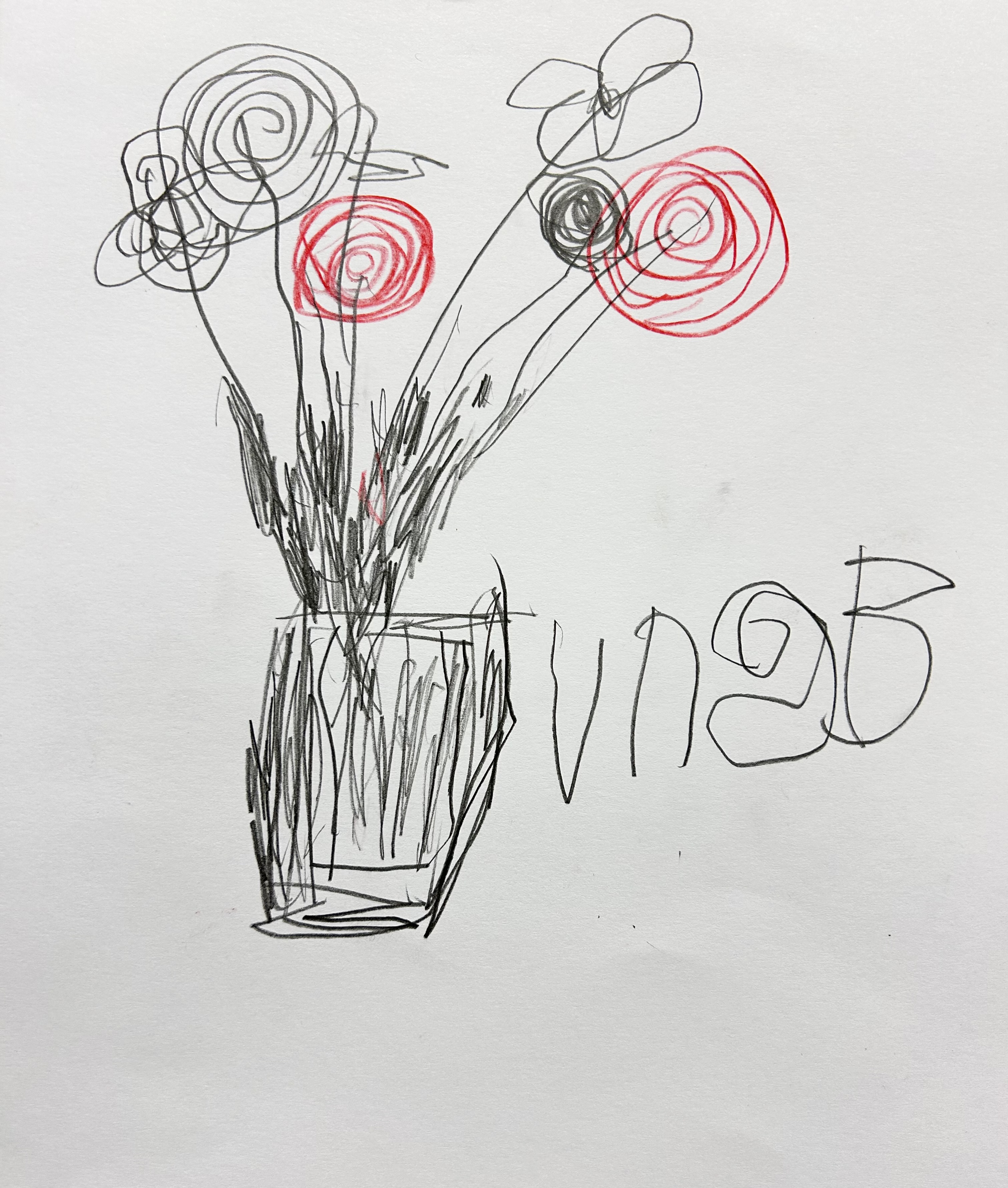
Curating Beyond Categories - Reflections on URLO / Seven Voices
Perhaps the challenge is not to erase differences, but to create contexts in which they are not the only thing we see. Starting from the experience of URLO – Seven Voices, SCENIUS reflects on the relationship between curating, inclusion and contemporary artistic practice.
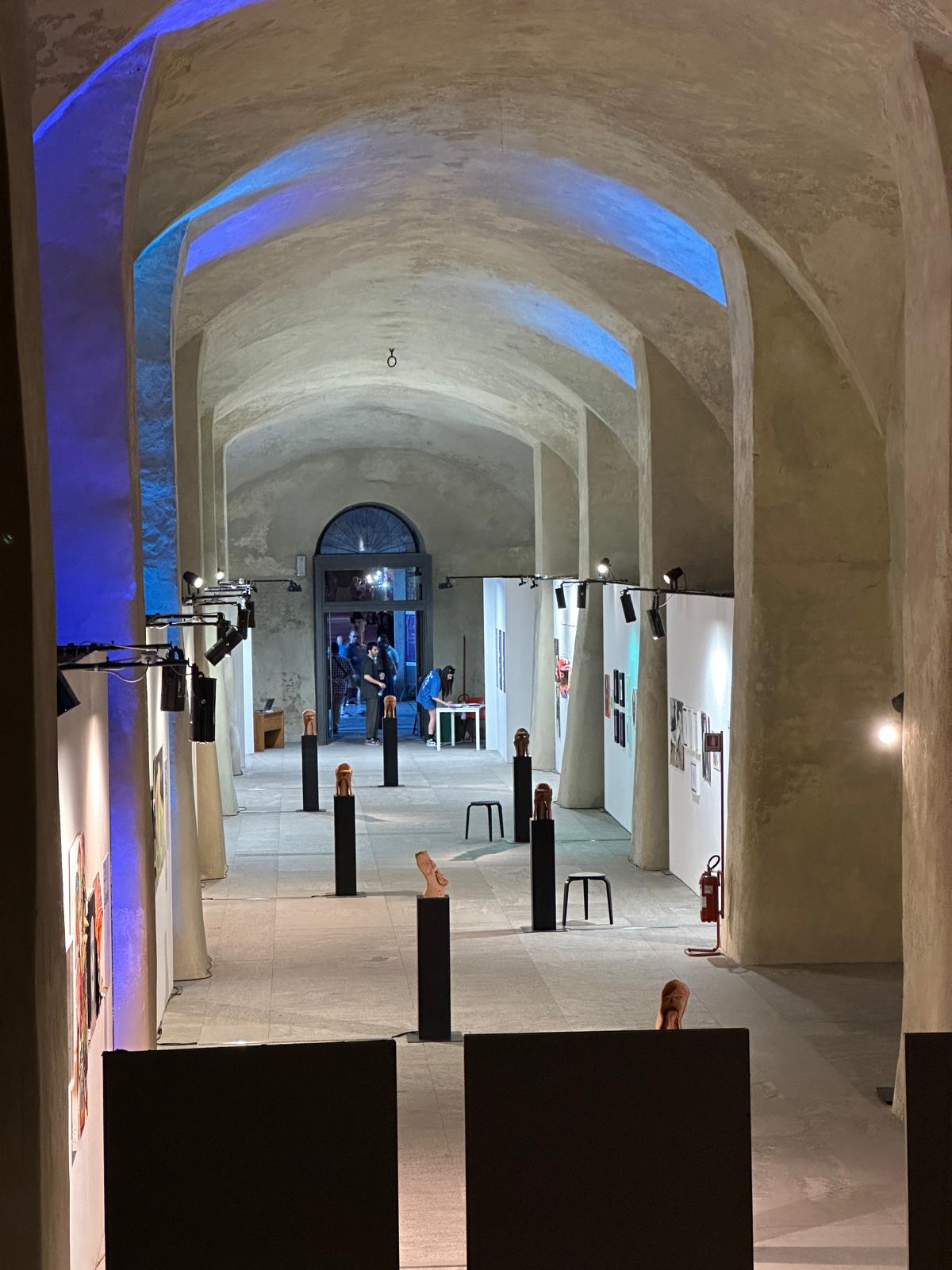
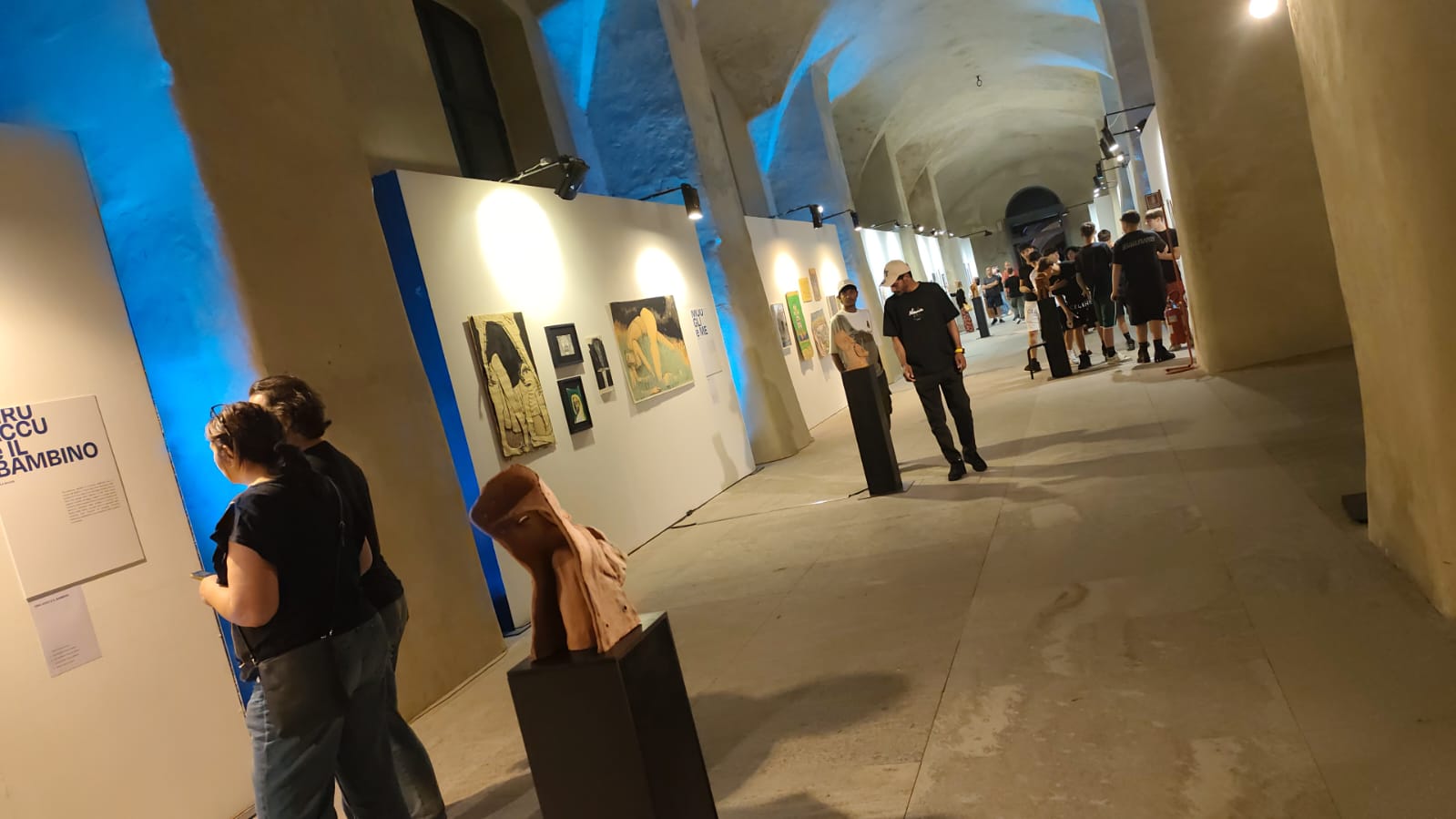
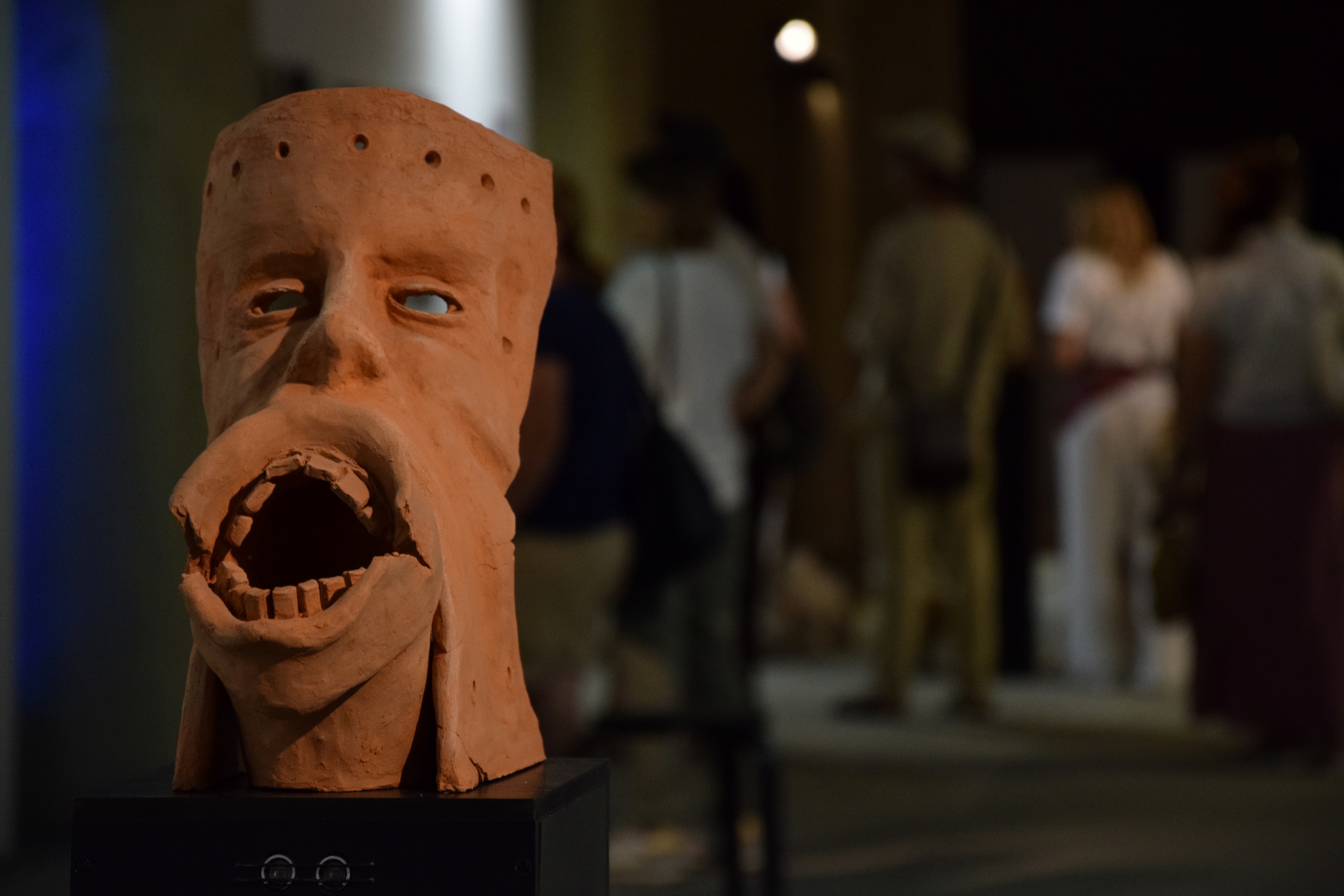
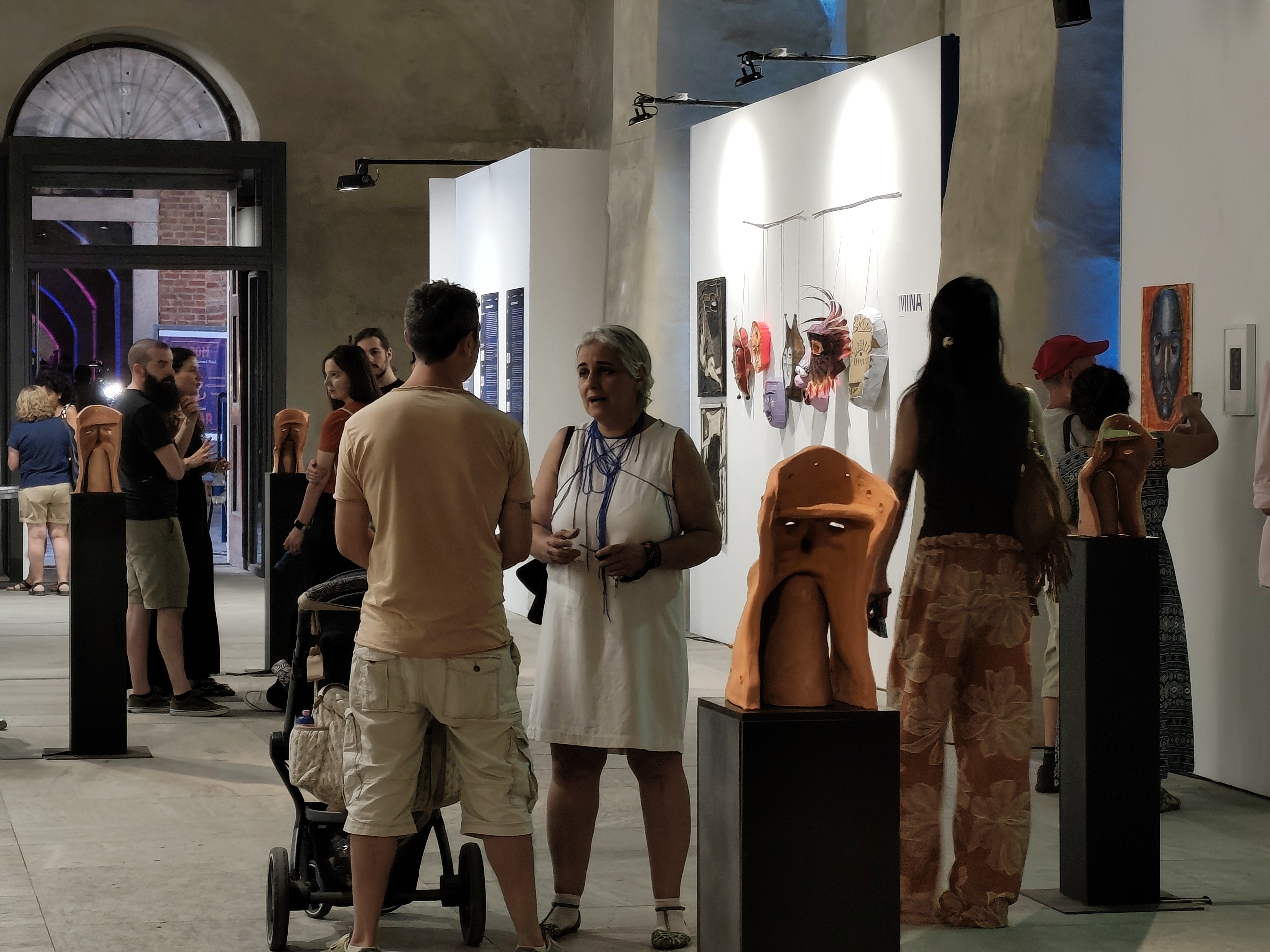
From June 11 to 14, 2026, the Underground Passage of the Sforza Castle in Vigevano hosted URLO – Seven Voices, a collective exhibition presented as part of URLO Festival and conceived through the encounter between The Seven Sirens, an interactive sound installation byTommaso Correale Santacroce, and a selection of works drawn from the international SCENIUS network.
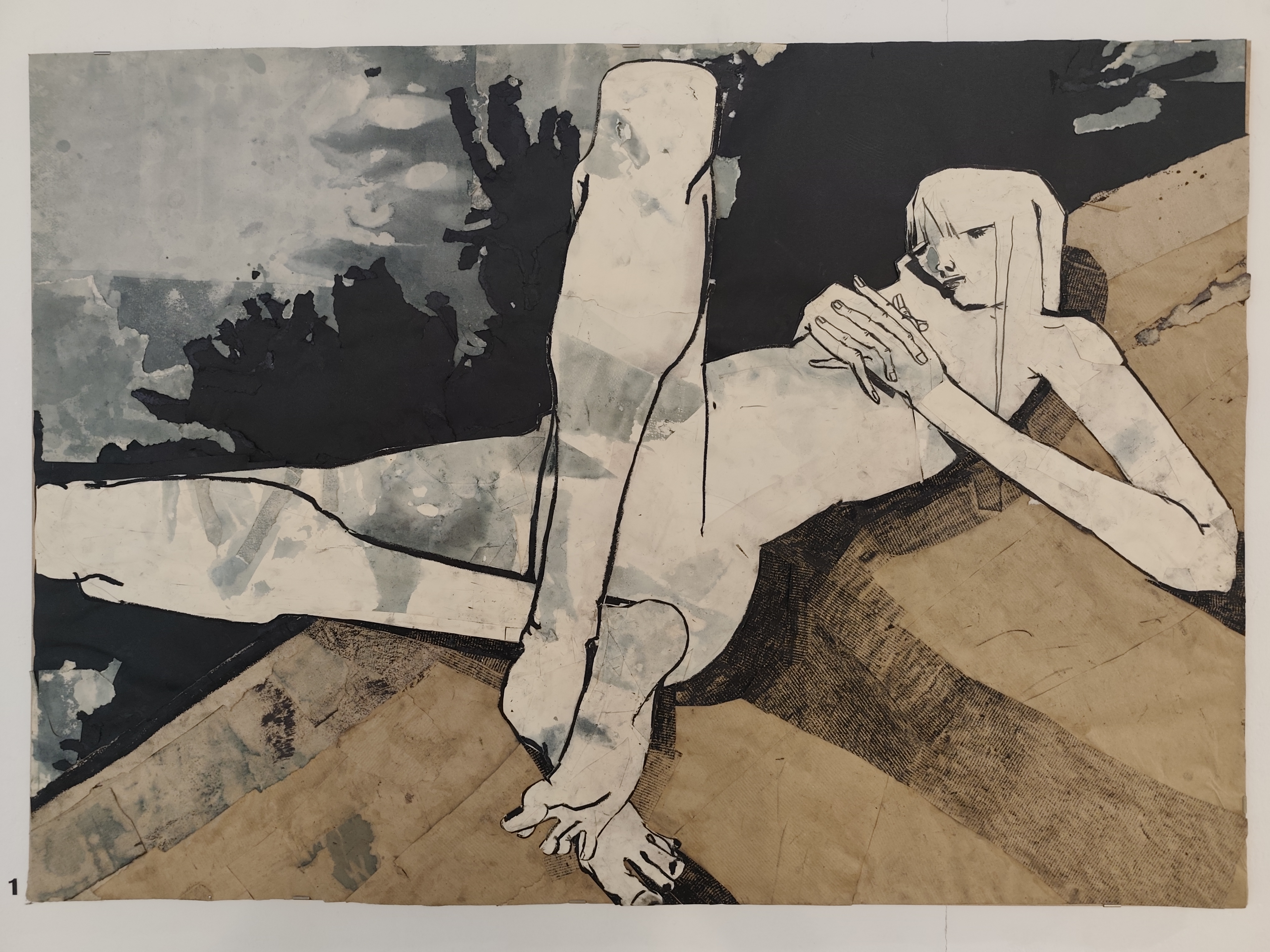
Curated by Lucrezia Arrigoni and Cavallo Blu APS ETS, the exhibition brought together artists, studios and organizations from different geographical and cultural contexts, including the Center for Depth Art and Humanities Research (Belgrade), Werd:art (Vienna), SMacc – San Marcellino Arte Cultura Creatività (Genoa), GliAcrobati (Turin), Laboratorio di Sara e Jack(Mortara), BLULAB and Marco Avaro.
The exhibition unfolded around seven narrative constellations inspired by Correale Santacroce's Sirens. War, migration,environmental crisis, isolation, violence, memory and transformation became territories of exploration in which images, voices and artistic practices were invited to confront one another.
For SCENIUS, the exhibition represented more than a simple display of artworks.
It was one of the first occasions in which the network assumed a tangible and shared form.
A digital platform composed of artists, organizations and diverse artistic practices was temporarily transformed into a real space of encounter.
Several days after the exhibition closed, what appears most significant is not only the remarkable public response it received, nor the attention it attracted from artists, cultural operators and partner organizations.
Perhaps the most interesting aspect concerns the way in which the works themselves were experienced.
Those working in the fields of outsider art and inclusive artistic practices are well acquainted with a tension that has accompanied these areas for decades.
Works are often introduced through the biographies of their makers.
First comes the personal story.
Then the context.
Then the vulnerability.
Only afterwards the artwork itself.
This mechanism is understandable and often motivated by the best intentions. It emerges from the desire to restore visibility and dignity to people and experiences that have long remained overlooked or marginalized.
Yet it also carries a risk.
The risk of transforming the artwork into testimony.
Into documentation.
Into evidence.
Into the visible trace of a story that precedes and ultimately determines it.
When this happens, the aesthetic experience tends to recede into the background.
The work is no longer approached primarily through what it does, but through what it represents.
During the days of URLO, we had the impression that something different was taking place.
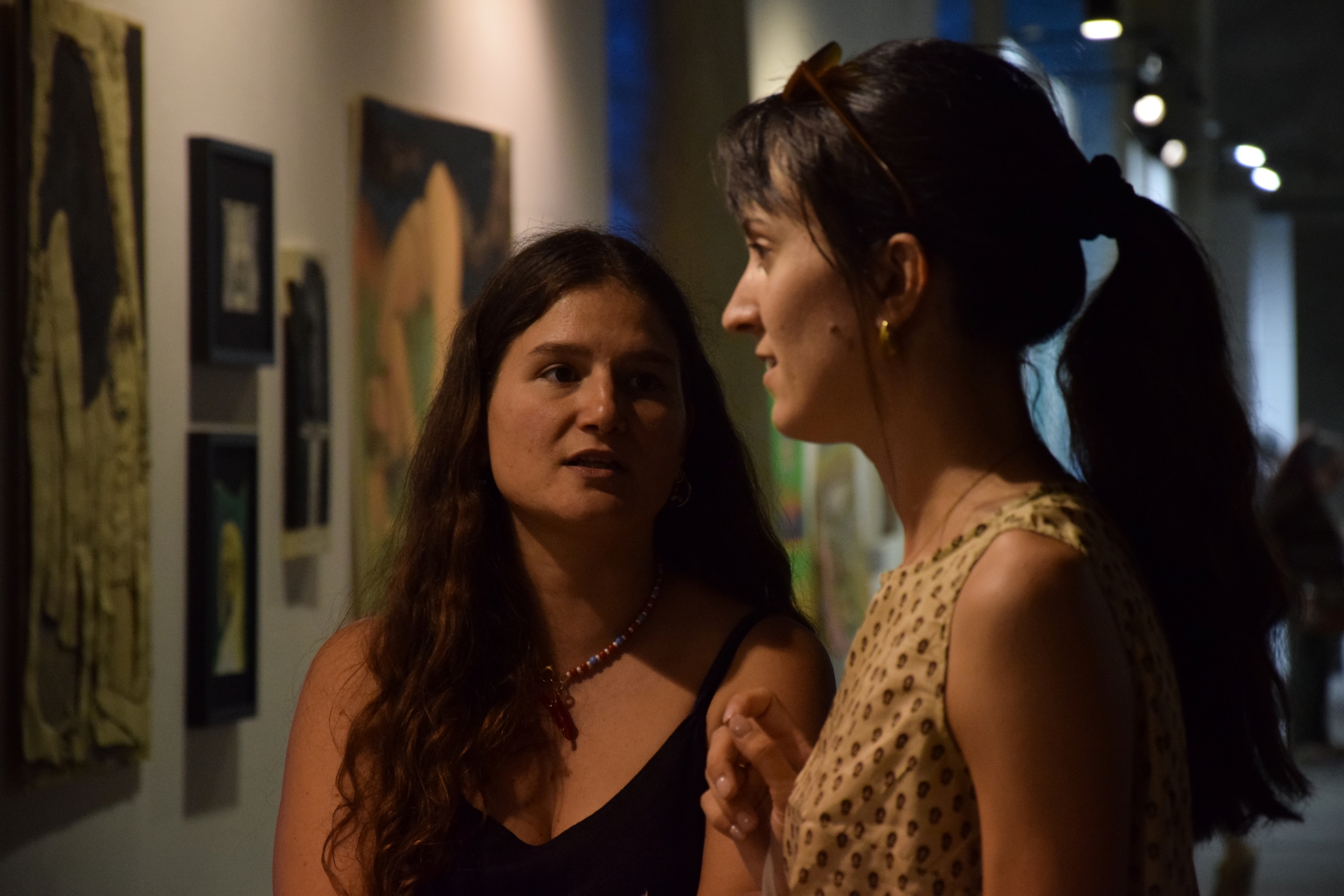
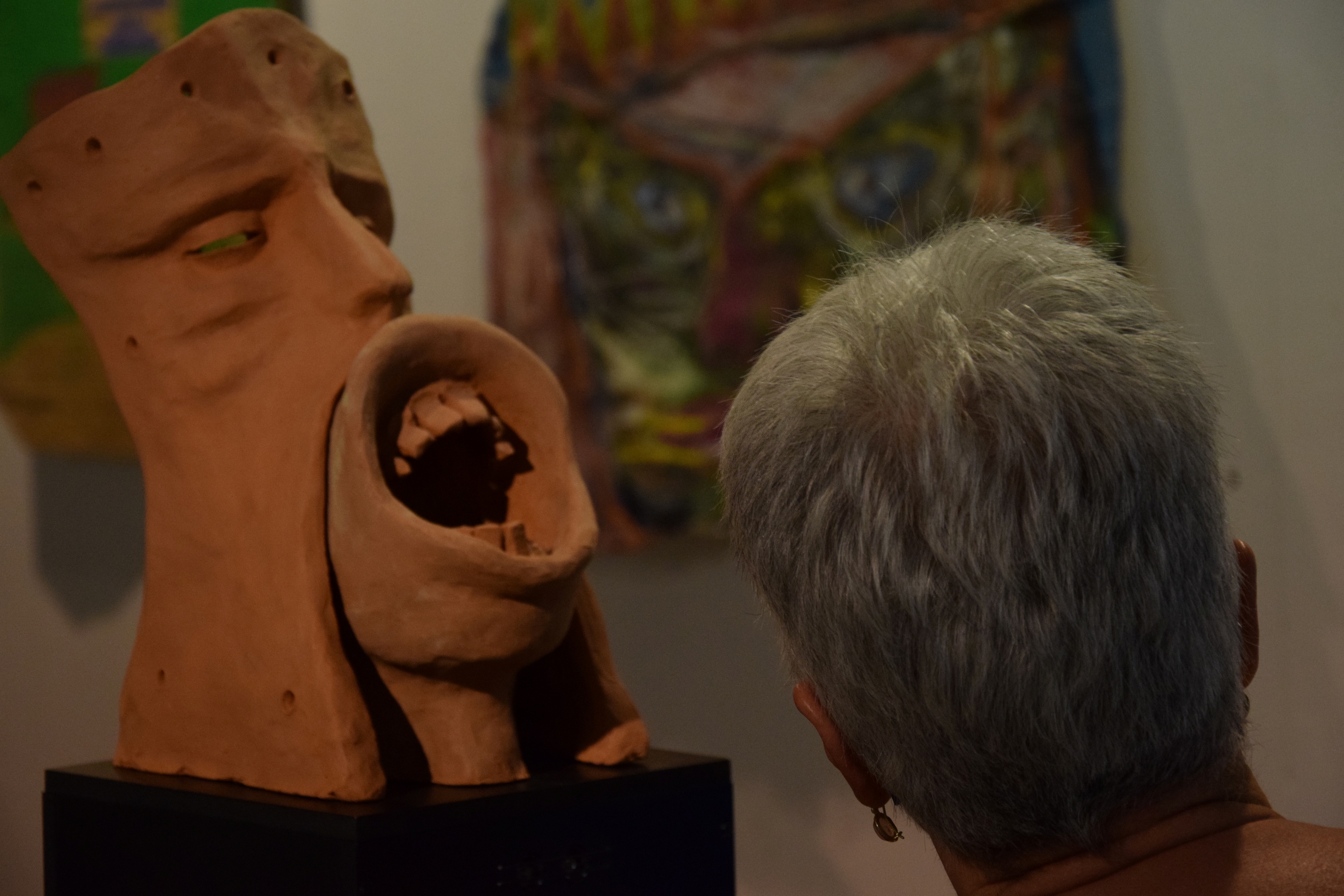
Visitors lingered in front of the works.
They observed them carefully.
They discussed their forms, atmospheres and symbolic dimensions.
They searched for connections between the images and the narratives embodied by the Sirens.
They allowed themselves to be drawn into the themes proposed by the exhibition.
Only afterwards did questions emerge about the artists or their backgrounds.
This is not a secondary detail.
It suggests the possibility of a different relationship between artwork, artist and audience.
A relationship in which biography does not disappear, butceases to function as the sole point of entry.
The artwork returns to the centre of the encounter.
In this sense, curatorial practice plays a crucial role.
An exhibition is never a simple accumulation of works.
It is a device capable of generating relationships.
It can reinforce existing categories or temporarily suspend them.
It can emphasize differences or create a space in which they enter into dialogue.
In URLO, the relationship between the Sirens and the works from the SCENIUS network operated precisely in this way.
The Sirens did not illustrate the exhibition's themes.
Nor did they explain the works.
Rather, they functioned as threshold figures.
As narrative devices capable of holding together different artistic languages without reducing them to a single interpretation.
Each artwork retained its autonomy.
Yet each entered into dialogue with a broader symbolicfield.
It is perhaps within this intermediate space that the exhibition found its balance.
Not in the erasure of differences.
But in the possibility of allowing them to coexist within ashared experience.
For SCENIUS, this experience opens a reflection that extends beyond a single exhibition.
What happens when artists from very different backgrounds are brought together within a shared curatorial framework?
What happens when categories of belonging cease to function as the primary organizing principle of an exhibition?
What happens when the central question is no longer inclusion, but art itself?
Perhaps this is where one of the most compelling challenges for the future of the network lies.
Not in creating spaces where differences are denied.
But in creating contexts where they are not the only thingthat can be seen.
Contexts in which artworks may be encountered before the labels we habitually use to describe them.
URLO does not offer definitive answers to these questions.
What it offers instead is a direction.
A direction in which curating is not merely the act of arranging works in space, but of creating the conditions through which unexpected relationships can emerge between artists, languages, audiences and imaginaries.
Perhaps this is where a network such as SCENIUS can find its most meaningful role.
Not only as an archive, a platform or a space of visibility.
But as a structure capable of generating encounters.
Because, ultimately, every network acquires meaning only when it produces something that did not previously exist.
And sometimes what emerges from those encounters is not simply an exhibition.
It is a new way of seeing.
Alcune riflessioni a partire da URLO – da sette voci
Forse la sfida non consiste nell'eliminare le differenze, ma nel costruire contesti in cui non siano l'unica cosa visibile. A partire dall'esperienza di URLO – da sette voci, SCENIUS riflette sul ruolo della curatela come pratica capace di generare incontri inattesi tra opere, artisti e pubblici differenti.
Dall'11 al 14 giugno 2026 la Strada Sotterranea Attrezzata del Castello Sforzesco di Vigevano ha ospitato URLO – da sette voci, mostra collettiva realizzata nell'ambito di URLO Festival e nata dall'incontro tra Le Sette Sirene, installazione sonora e interattiva di TommasoCorreale Santacroce, e una selezione di opere provenienti dalla rete internazionale SCENIUS.
Curata da Lucrezia Arrigoni e Cavallo Blu APS ETS, la mostra ha riunito artisti, atelier e organizzazioni provenienti da contesti geografici e culturali differenti, tra cui Center for Depth Art and Humanities Research(Belgrado), Werd:art (Vienna), SMacc – San Marcellino Arte Cultura Creatività(Genova), Gli Acrobati (Torino), Laboratorio di Sara e Jack (Mortara), BLULAB e Marco Avaro.
Il percorso espositivo si sviluppava attorno a sette nuclei narrativi ispirati alle Sirene di Correale Santacroce. Guerra, migrazione, crisi ambientale, isolamento, violenza, memoria e trasformazione diventavano altrettanti territori di attraversamento nei quali opere, immagini e voci differenti erano chiamate a confrontarsi.
Per SCENIUS la mostra ha rappresentato qualcosa di più diuna semplice occasione espositiva.
È stata una delle prime situazioni in cui la rete ha assuntouna forma fisica e condivisa.
Una piattaforma digitale composta da artisti, organizzazionie pratiche differenti si è trasformata temporaneamente in uno spazio reale di incontro.
A distanza di qualche giorno dalla conclusione della mostra, ciò che appare particolarmente interessante non riguarda soltanto il significativo riscontro di pubblico o l'attenzione ricevuta da parte di artisti e operatori culturali.
La questione più interessante riguarda forse il modo in cui le opere sono state guardate.
Chi lavora nell'ambito dell'outsider art e delle pratiche artistiche inclusive conosce bene una tensione che accompagna da tempo questo campo di ricerca.
Molto spesso le opere vengono introdotte attraverso le biografie dei loro autori.
Prima la storia personale.
Poi il contesto.
Poi la fragilità.
Infine l'opera.
È un meccanismo comprensibile e spesso animato dalle migliori intenzioni. Nasce dal desiderio di restituire dignità e visibilità a persone e percorsi che per lungo tempo sono stati ignorati o marginalizzati.
Tuttavia questo approccio presenta anche un rischio.
Quello di trasformare l'opera in testimonianza.
In documento.
In sintomo.
In prova materiale di una storia che la precede e la determina.
Quando questo accade, l'esperienza estetica tende a passare in secondo piano.
L'opera smette di essere interrogata per ciò che produce eviene osservata principalmente per ciò che rappresenta.
Durante i giorni di URLO abbiamo avuto l'impressione che qualcosa di diverso fosse accaduto.
Le persone si fermavano davanti ai lavori.
Li osservavano.
Ne discutevano le forme, le atmosfere, i simboli.
Cercavano connessioni tra le immagini e le narrazioni proposte dalle Sirene.
Si lasciavano coinvolgere dai temi del percorso.
Solo successivamente emergevano domande sugli artisti o sui contesti di provenienza.
Non si tratta di un dettaglio secondario.
Perché suggerisce una possibilità diversa di costruire il rapporto tra opera, artista e pubblico.
Una possibilità nella quale la biografia non scompare ma smette di essere l'unica chiave di accesso.
L'opera torna a occupare il centro della relazione.
In questo senso la curatela assume un ruolo decisivo.
Una mostra non è mai una semplice somma di opere.
È un dispositivo capace di produrre relazioni.
Può confermare categorie già esistenti oppure metterle temporaneamente in discussione.
Può enfatizzare le differenze oppure costruire uno spazio nel quale esse entrano in dialogo.
Nel caso di URLO il rapporto tra le Sirene e le opere della rete SCENIUS ha funzionato proprio in questa direzione.
Le Sirene non illustravano i temi della mostra.
Non spiegavano le opere.
Agivano piuttosto come presenze di soglia.
Come dispositivi narrativi capaci di tenere insieme linguaggi differenti senza ridurli a un'unica interpretazione.
Ogni opera manteneva la propria autonomia.
Ma allo stesso tempo entrava in relazione con un campo simbolico più ampio.
È probabilmente in questo spazio intermedio che la mostra ha trovato il proprio equilibrio.
Non nella cancellazione delle differenze.
Ma nella possibilità di farle convivere all'interno di una stessa esperienza.
Per SCENIUS questa esperienza apre una riflessione che va oltre la singola mostra.
Che cosa accade quando artisti provenienti da percorsi molto diversi vengono coinvolti all'interno di un progetto curatoriale condiviso?
Che cosa accade quando la categoria di appartenenza smette di essere il principio organizzatore dell'esposizione?
Che cosa accade quando il tema non è l'inclusione, ma l'arte?
Forse proprio qui si trova una delle questioni più interessanti per il futuro della rete.
Non costruire spazi nei quali le differenze vengano negate.
Ma costruire contesti nei quali non siano l'unica cosa visibile.
Contesti nei quali le opere possano essere incontrate prima delle etichette che abitualmente utilizziamo per descriverle.
URLO non offre una risposta definitiva a queste domande.
Ma suggerisce una direzione.
Una direzione nella quale la curatela non si limita aorganizzare opere nello spazio, ma costruisce le condizioni affinché possano emergere relazioni inattese tra artisti, linguaggi, pubblici e immaginari.
Forse è proprio qui che una rete come SCENIUS può trovare ilproprio ruolo.
Non soltanto come archivio, piattaforma o luogo di visibilità.
Ma come spazio capace di generare incontri.
Perché, in fondo, ogni rete acquista significato soltantoquando produce qualcosa che prima non esisteva.
E talvolta ciò che nasce da questi incontri non è soltanto una mostra.

.jpg)