SCENIUS is a platform that takes spatial form.
Across three stages — Carate Brianza, Legnano and Vigevano — the project activates a network of artists, studios and organizations, foregrounding the idea of “shared places” as a relational practice.
SCENIUS — when the platform becomes space
There are exhibitions that begin in a space and remain confined to it. And there are projects that, before taking any physical form, already exist as a network.
SCENIUS belongs to the latter.
It originates as a digital platform, but not as an archive or a container. SCENIUS is a relational infrastructure: a device that connects artists, studios and organizations working within inclusive artistic practices, building over time a shared field of exchange, research and production.
Within this framework, exhibitions are not an extension of the project, but the moment in which the platform becomes visible.
Shared places as a principle
From the very beginning, SCENIUS has been structured around a key concept: shared places.
Shared places are not simply a curatorial choice or a display strategy. They are the underlying principle of the entire project.
Each participating entity — whether a studio, an association or a research center — is not treated as a contributor, but as a place: an active context shaped by specific practices, temporalities and relationships.
To exhibit, then, means to share space without dissolving difference.
In this sense, the shared place operates as a relational device: it does not organize works by similarity, but brings them into proximity, making differences visible while opening the possibility of connection.
Carate Brianza — a first configuration
At the Auditorium of BCC in Carate Brianza (March 5–29), this principle took its first visible form.
The exhibition did not unfold as a homogeneous selection, but as a constellation of presences — distinct places coexisting within the same space.
What emerged was not a unified aesthetic, but a structure of relations.
Carate functioned as a threshold: the passage from platform as invisible network to platform as shared presence.
Legnano — continuity of relation
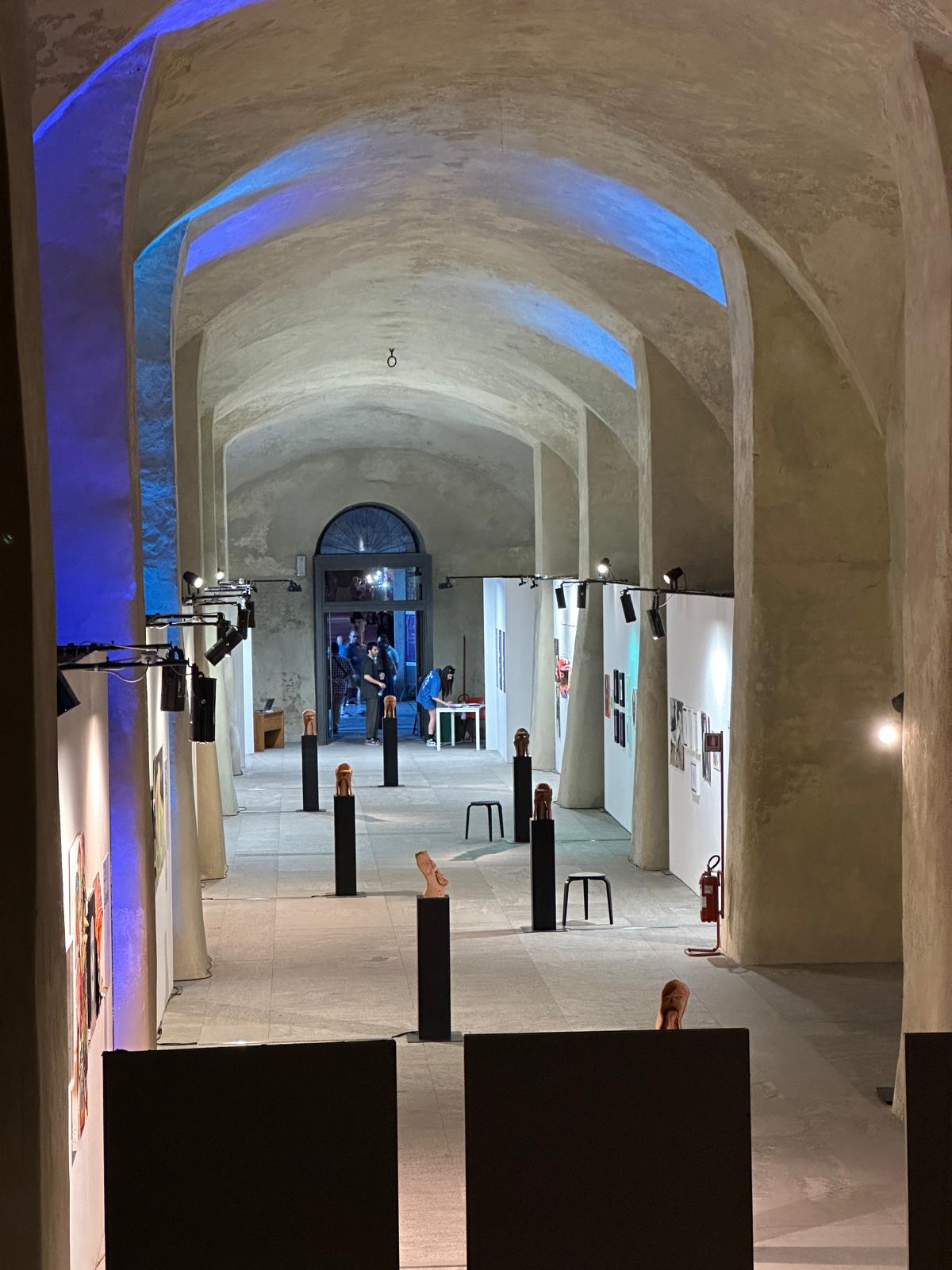
The Legnano stage (Palazzo Leone da Perego, March 15) did not introduce a new principle, but rather tested its persistence under different conditions.
In a more concentrated format, SCENIUS demonstrated its ability to maintain relational intensity even within a reduced temporal and spatial frame.
Here, the shared place revealed itself as a practice rather than a fixed structure.
What remains constant is not the form of the exhibition, but the quality of the relations that sustain it.
Vigevano — a situated configuration
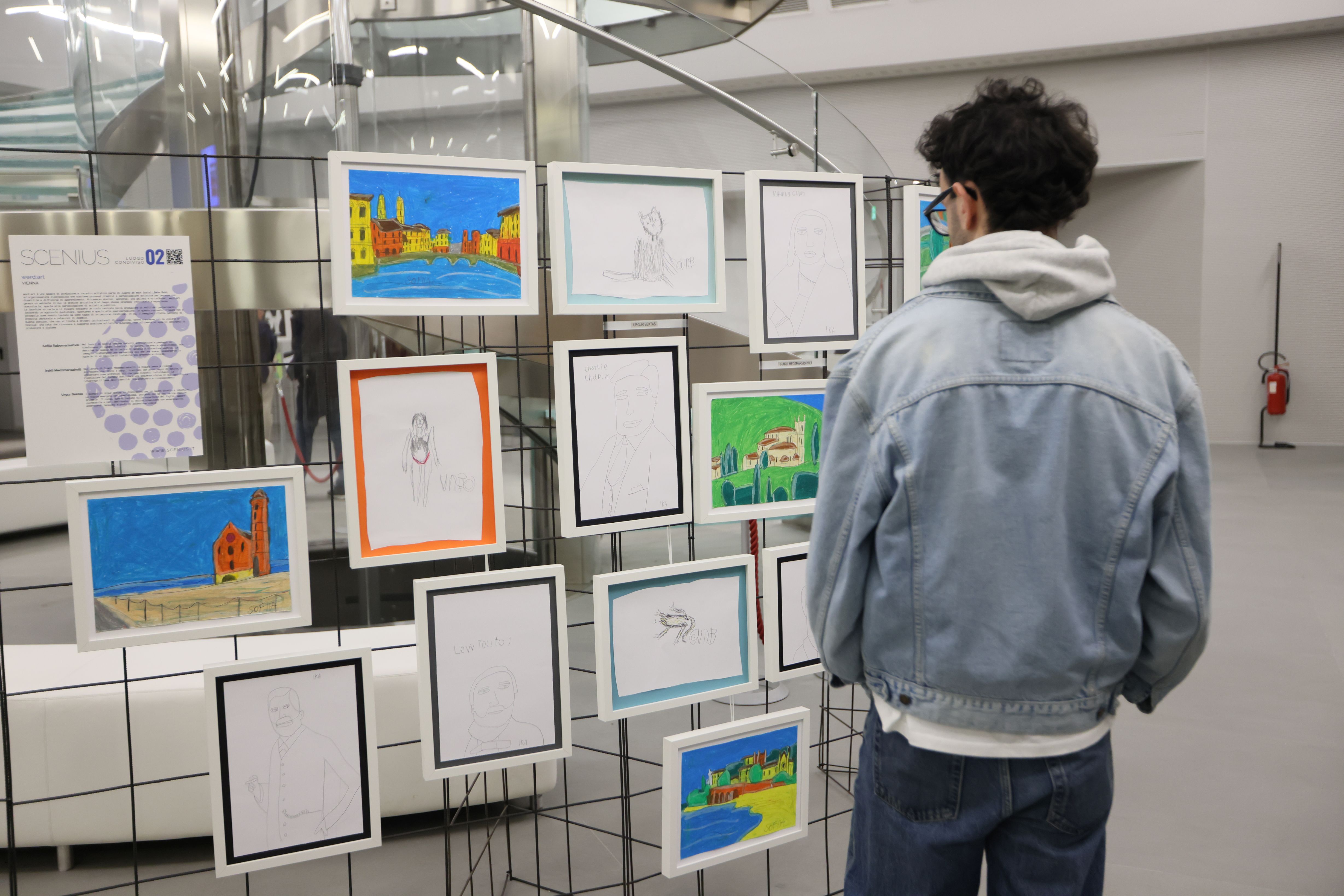
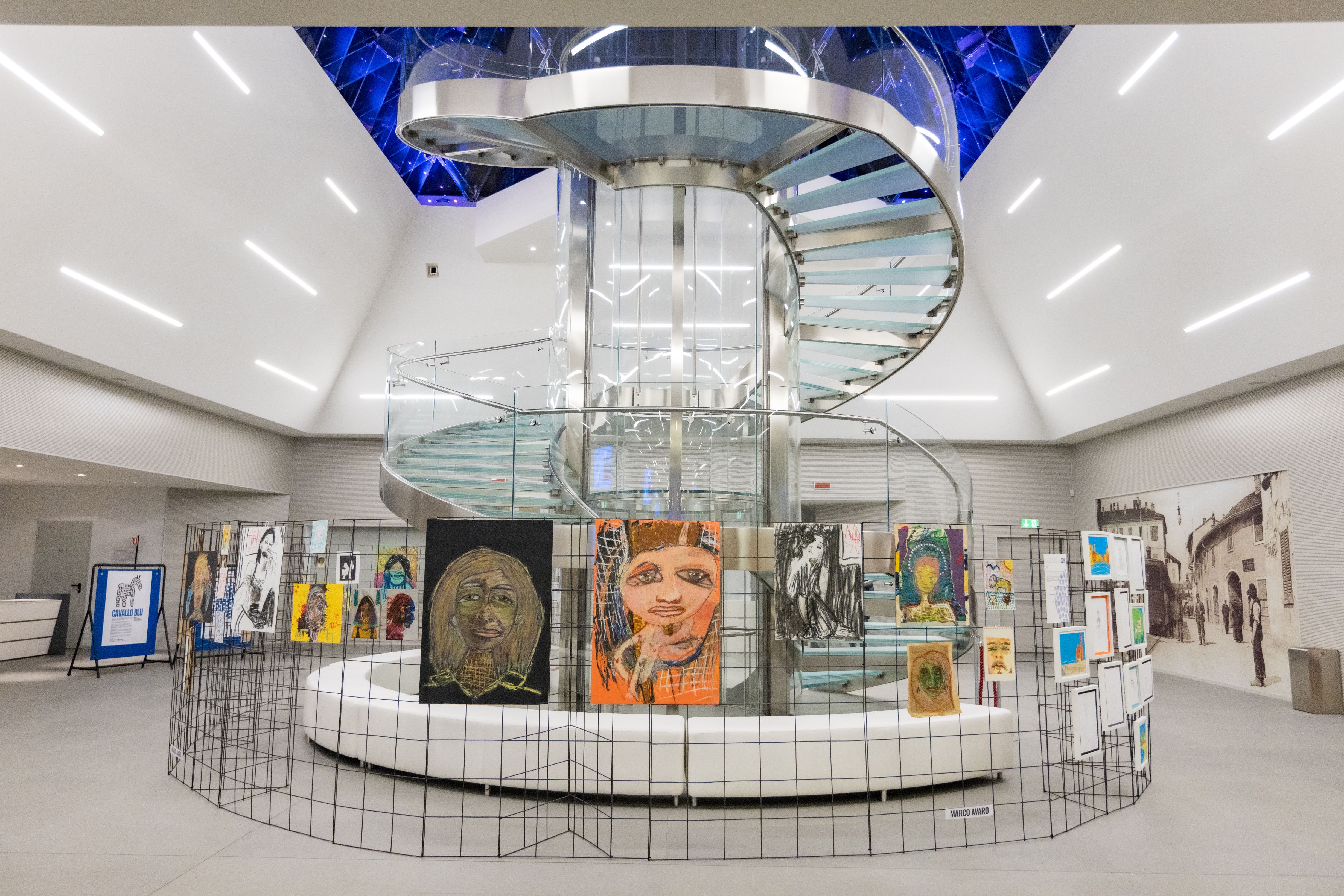
In Vigevano (April 17–19, Cavallo Blu APS), the principle of shared places finds a new, context-specific articulation.
The participating entities — werd:art (Vienna), Center for Depth Art and Humanities Research (Belgrade), Gli Acrobati (Turin), and Marco Avaro — are not presented as elements of a unified whole, but as distinct places entering into relation.
werd:art operates within the framework of Jugend am Werk, offering a structured model of artistic production embedded in the Austrian cultural welfare system.
The Center for Depth Art and Humanities Research introduces a research-oriented dimension, where artistic practice intersects with the humanities.
Gli Acrobati work at the intersection of visual and performative practices, with a strong focus on collective processes and mental health.
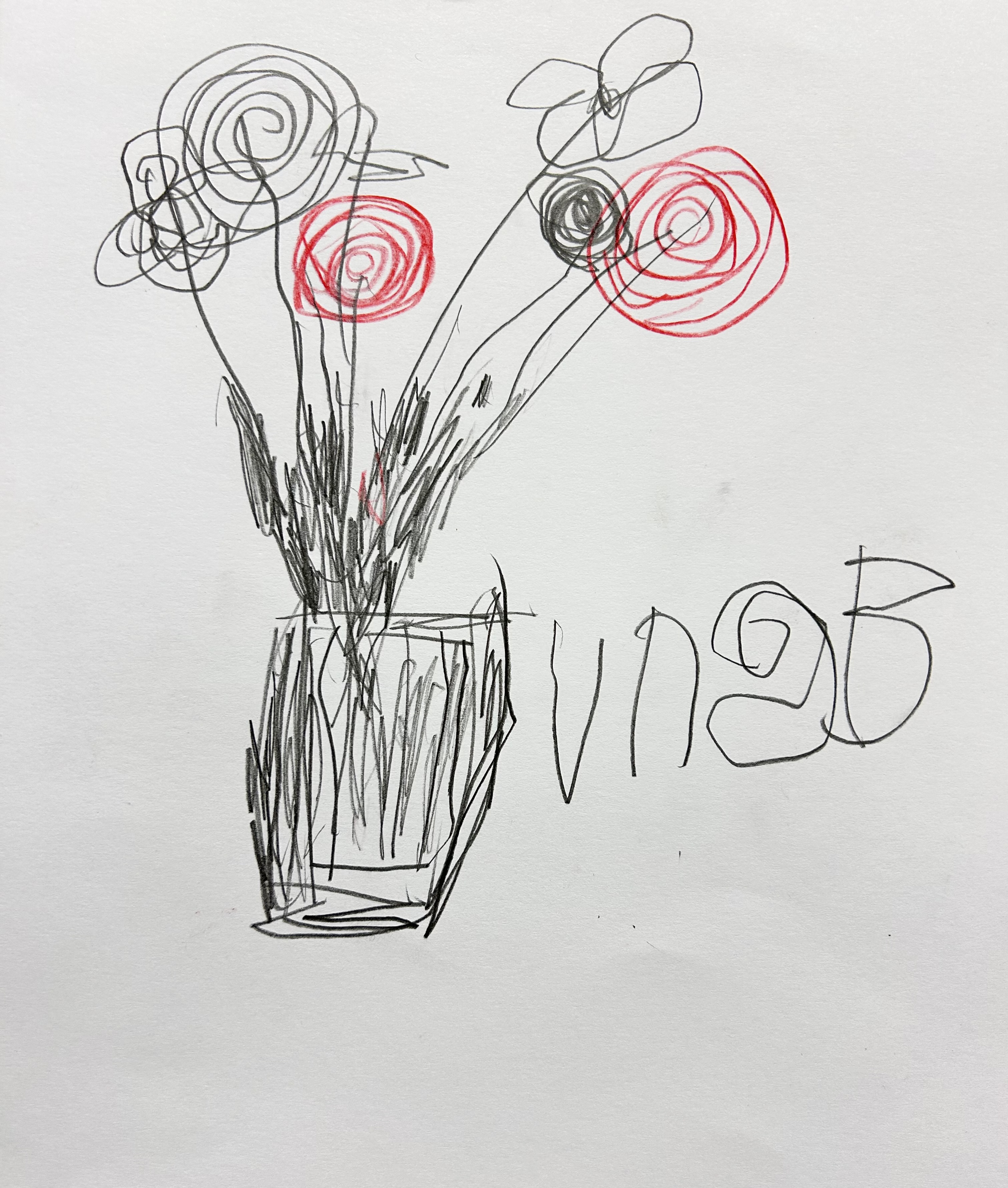
Marco Avaro represents an individual trajectory, where drawing becomes an act of affirmation and resistance.
Alongside these, BLULAB — Cavallo Blu’s artistic studio — is not an additional section, but one of the originating places of the project: a space where artistic practice develops through time, relation and continuity.
The platform as relational space
In SCENIUS, platform and exhibition are not separate layers.
The platform is the space of connection. The exhibition is the space of its activation.
Shared places are where these two dimensions intersect: they make visible a network that already exists, transforming it into an embodied experience.
Beyond the logic of selection
The device of shared places challenges one of the most established logics of exhibition-making: selection by affinity.
Here, works are not brought together because they are similar, but because they are in relation.
They do not form a unified discourse, but an open field.
Within this field, differences are not reduced, but maintained as active forces.
Outsider art as a shift in perspective
Many of the practices involved are often framed within outsider art or art brut.
SCENIUS operates within this field, while also shifting its meaning.
The aim is not to include what is “other”, but to recognize that these practices actively participate in shaping the contemporary.
The center is not given. It is produced through relation.
A community in the making
Across its three stages — Carate, Legnano, Vigevano — what emerges is not a travelling exhibition, but a community taking form.
Not a predefined community, but one that is produced through practice: through sharing space, time and processes.
An ongoing practice
SCENIUS does not coincide with any of its exhibitions.
It is an ongoing process that continues to generate connections, a platform that takes form differently each time, a constellation of places that, by sharing space, produce something new.
SCENIUS — dalla piattaforma allo spazio: i luoghi condivisi come pratica
Ci sono progetti espositivi che nascono nello spazio e lì si esauriscono. E ce ne sono altri che, prima ancora di prendere forma in un allestimento, esistono come rete.
SCENIUS appartiene a questa seconda condizione.
Nasce come piattaforma digitale, ma non nel senso di archivio o contenitore. SCENIUS è una infrastruttura relazionale: un dispositivo che mette in connessione artisti, atelier e organizzazioni attive nelle pratiche artistiche inclusive, costruendo nel tempo un campo condiviso di lavoro, ricerca e scambio.
In questo contesto, le mostre non sono un’estensione del progetto, ma il momento in cui la piattaforma diventa visibile.
I luoghi condivisi come principio
Fin dalla prima tappa, SCENIUS si struttura attorno a un concetto preciso: quello di luoghi condivisi.
I luoghi condivisi non sono semplicemente una scelta curatoriale o una modalità di allestimento. Sono il principio che orienta l’intero progetto.
Ogni realtà coinvolta — atelier, associazione, centro di ricerca — non viene ridotta a “partecipante”, ma riconosciuta come luogo: un contesto attivo, portatore di pratiche, tempi, relazioni.
Esporre significa allora condividere uno spazio senza perdere la propria specificità.
Il luogo condiviso è, in questo senso, un dispositivo relazionale: non organizza le opere per somiglianza, ma le mette in prossimità, rendendo visibili le differenze e le possibilità di connessione.
Carate Brianza — la prima configurazione
All’Auditorium della BCC di Carate Brianza (5–29 marzo), questo principio ha trovato una prima forma.
La mostra non si è costruita come una selezione omogenea, ma come un insieme di presenze: luoghi diversi che coesistevano nello stesso spazio.
Ciò che emergeva non era un’estetica comune, ma una struttura di relazioni.
In questo senso, Carate non è stato un punto di partenza in senso lineare, ma una prima attivazione visibile della piattaforma: il momento in cui i luoghi condivisi hanno preso corpo.
Legnano — la continuità della relazione
La tappa di Legnano (Palazzo Leone da Perego, 15 marzo) non ha introdotto un cambiamento di principio, ma una sua conferma in condizioni diverse.
In uno spazio e in un tempo più concentrati, SCENIUS ha mostrato la propria capacità di mantenere attiva la relazione anche in una forma ridotta.
Il luogo condiviso, in questo passaggio, si è rivelato per ciò che è: non una struttura fissa, ma una pratica.
Ciò che resta costante non è la forma dell’allestimento, ma la qualità delle relazioni che lo attraversano.
Vigevano — una configurazione situata
Nella tappa di Vigevano (17–19 aprile, Cavallo Blu APS), il principio dei luoghi condivisi trova una nuova configurazione, radicata nel contesto che lo ospita.
Le realtà coinvolte — werd:art (Vienna), Center for Depth Art and Humanities Research (Belgrado), Gli Acrobati (Torino), Marco Avaro — non sono presentate come elementi di un insieme, ma come luoghi che entrano in relazione.
werd:art porta un modello strutturato di produzione artistica all’interno del welfare culturale austriaco. Il Center for Depth Art and Humanities Research introduce una dimensione di ricerca che intreccia arte e scienze umane. Gli Acrobati lavorano sulla dimensione collettiva del processo artistico, tra arti visive e performative. Marco Avaro rappresenta una pratica individuale, in cui il segno diventa atto di affermazione.
A questi si affianca BLULAB, atelier artistico di Cavallo Blu, che non è una presenza aggiuntiva, ma uno dei luoghi da cui il progetto stesso prende forma.
La piattaforma come spazio relazionale
In SCENIUS, la piattaforma e la mostra non sono due livelli separati.
La piattaforma è il luogo della connessione. La mostra è il luogo della sua attivazione.
I luoghi condivisi sono il punto in cui questi due livelli si incontrano: rendono visibile una rete che esiste già, ma che nello spazio fisico si trasforma in esperienza.
Oltre la logica della selezione
Il dispositivo dei luoghi condivisi mette in discussione una delle logiche più consolidate della pratica espositiva: la selezione per affinità.
Qui le opere non vengono accostate perché simili, ma perché in relazione. Non costruiscono un discorso unitario, ma un campo aperto.
In questo campo, le differenze non vengono ridotte, ma mantenute attive.
Outsider art come spostamento di sguardo
Molte delle pratiche coinvolte vengono ricondotte all’outsider art o all’art brut.
SCENIUS si colloca in questo territorio, ma ne sposta il significato.
Non si tratta di includere ciò che è “altro”, ma di riconoscere che queste pratiche partecipano alla costruzione del contemporaneo.
Il centro non è dato: si costruisce nella relazione.
Una comunità che prende forma
Attraverso le tre tappe — Carate, Legnano, Vigevano — ciò che emerge non è una mostra che si sposta, ma una comunità che si rende visibile.
Una comunità che non è definita a priori, ma che si produce nel fare: nel condividere spazi, pratiche, tempi.
Una pratica che continua
SCENIUS non coincide con nessuna delle sue mostre.
È un processo che continua a generare connessioni, una piattaforma che prende forma ogni volta in modo diverso, un insieme di luoghi che, condividendo uno spazio, costruiscono qualcosa che prima non c’era.

.jpg)
.png)